
The Houses
House Malurk
House Malurk rules Tarek under Ak-Malurk the Gray. Its authority grew through conquest; its territorial influence rests on a major army, extensive lands and large Tear-producing districts.
The identity of a House
Across the Kal-Muzar, House identity remains distinct from Domain and institutional authority. A seal authenticates a House's acts; a banner marks its presence; a ruler's insignia identifies an office.
Forces of the House
Each House maintains its own army. A Domain can mobilize contingents from its Houses, and a unified campaign can bring them under a temporary Kal-Muzar command. Soldiers retain their House identity throughout.
Within the Domain of Tarek
The House’s lineage and symbols remain distinct from the territorial government and army.
Explore the conquest of Tarek and the rivalry with Norek →Conquest and contested legitimacy
Tarek and the mining frontier
House Malurk governs the independent Domain of Tarek under Ak-Malurk the Gray. The Khur-Tarek Ridge connects its volcanic frontier, disputed mineral wealth and rivalry with Kharet.
The Maw of Dazhuk
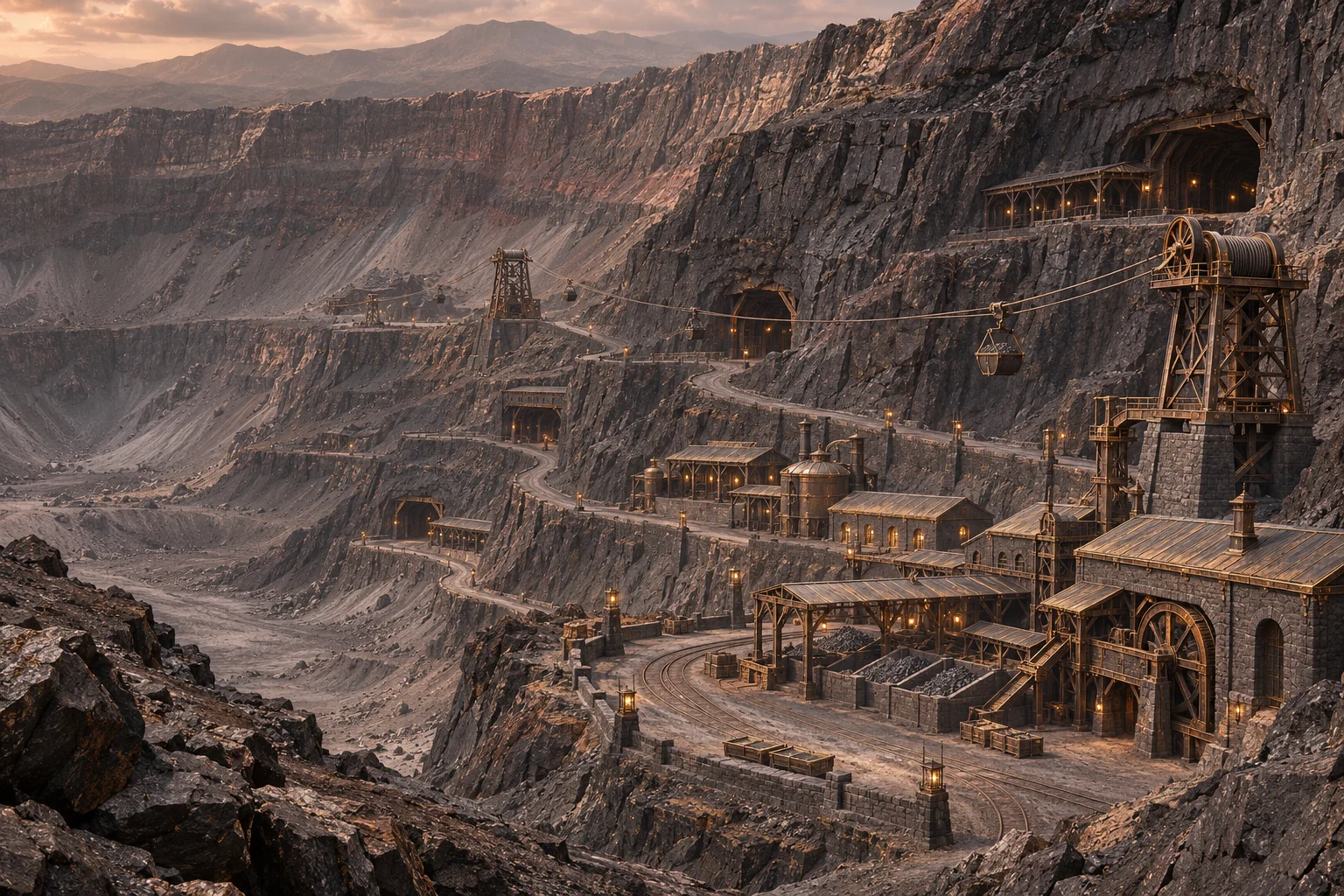
The Maw of Dazhuk is the principal Tear-extraction complex of Tarek, excavated within the caldera system of Dazhuk, the volcano known in Aqmorita tradition as Qur’Daq. Located east of Zarakh along the Khur-Tarek Ridge, it anchors Tarek’s control over the eastern mineral fields and the veins extending through its territory and into the disputed reaches of the Ridge. The complex, its access routes, extraction works, processing infrastructure, and surrounding deposits are controlled by House Malurk under Ak-Malurk the Gray. Unlike the Maw of Zarakh, which belongs to the Akdar sphere of extraction, Dazhuk represents Tarek’s competing source of Tears and gives Ak-Malurk substantial economic and strategic leverage over Enkora’s energy network.
Dazhuk / Qur’Daq in the volcanic atlas ↗ · Tarek’s mineral fields ↗
Recognition is not reconciliation
Ak-Malurk did not inherit Tarek peacefully. He broke with Akdar during the wars preceding the formation of the Kal-Muzar, conquered Tarek, destroyed its former ruling House, and seized control of the territory and its mineral infrastructure. His rule remained morally disputed, particularly by Norek Akdar, but the founders of the Kal-Muzar chose to recognize Tarek as one of the eight Domains because excluding it would have prolonged the war and left a powerful, resource-rich territory outside the new political order. The compromise deliberately separated recognition of the Domain from approval of its conqueror. The seat in the Kal-Muzar belonged to Tarek itself, not to House Malurk. Because Ak-Malurk controlled Tarek, he was permitted to occupy that seat and represent the Domain, even though the Kal-Muzar never declared his conquest or the destruction of the previous ruling House morally legitimate.
Lineage, community and territory
A House, a people and a Domain are different forms of belonging. Explore how family, patronage, local authority and territorial representation fit together.
House relationships · Culture & belonging · Family & everyday life
Volcanic resources and territorial claims
Explore how calderas, mineral veins, processing and routes connect geological wealth to political authority.
Household register
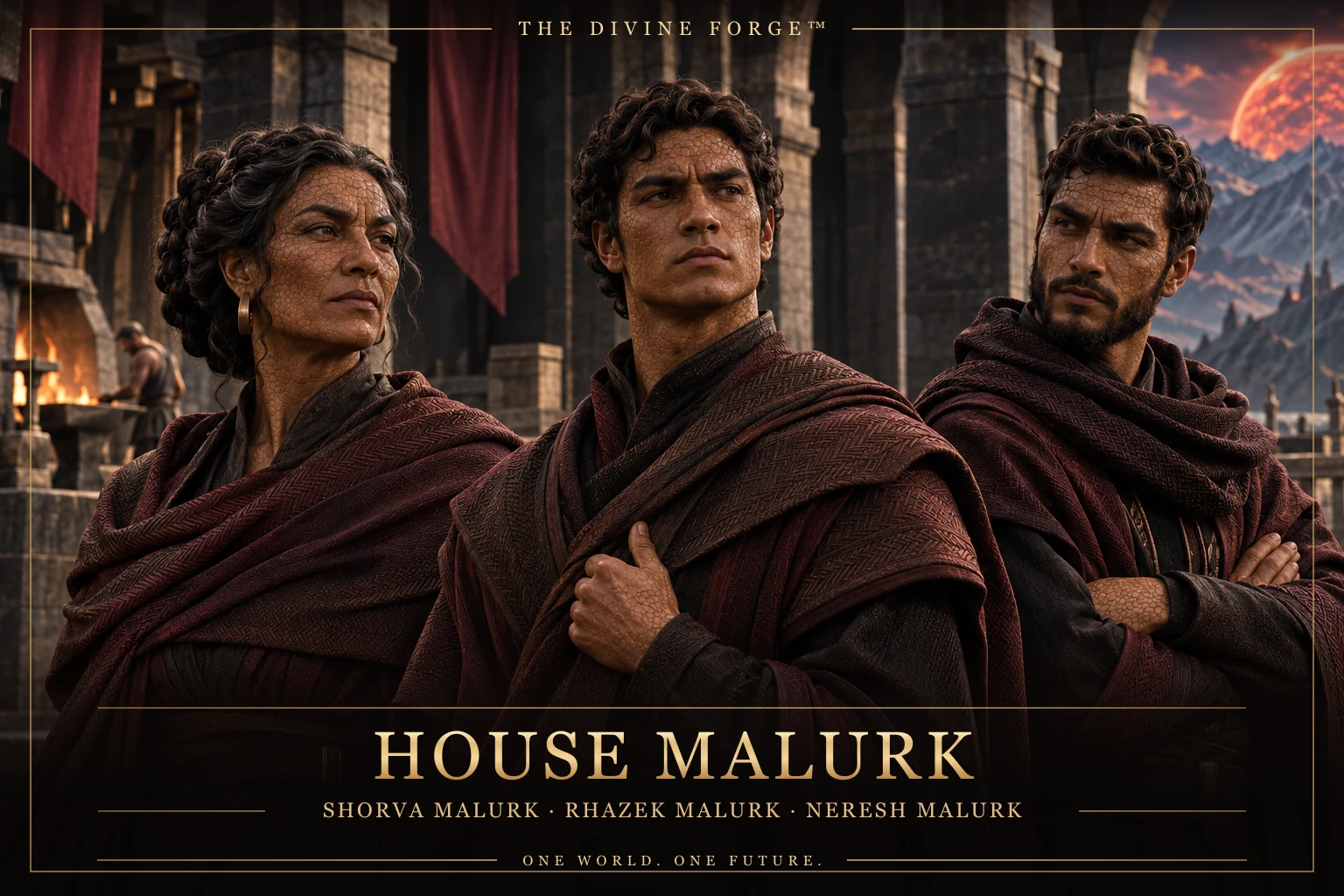
House Malurk
World & Historical Background
- Shorva MalurkWife of Ak-Malurk
- Rhazek MalurkSon of Ak-Malurk and Shorva
- Neresh MalurkSon of Ak-Malurk and Shorva
Minor Houses · House Sharak · House Tarek · House Kur · House Keran