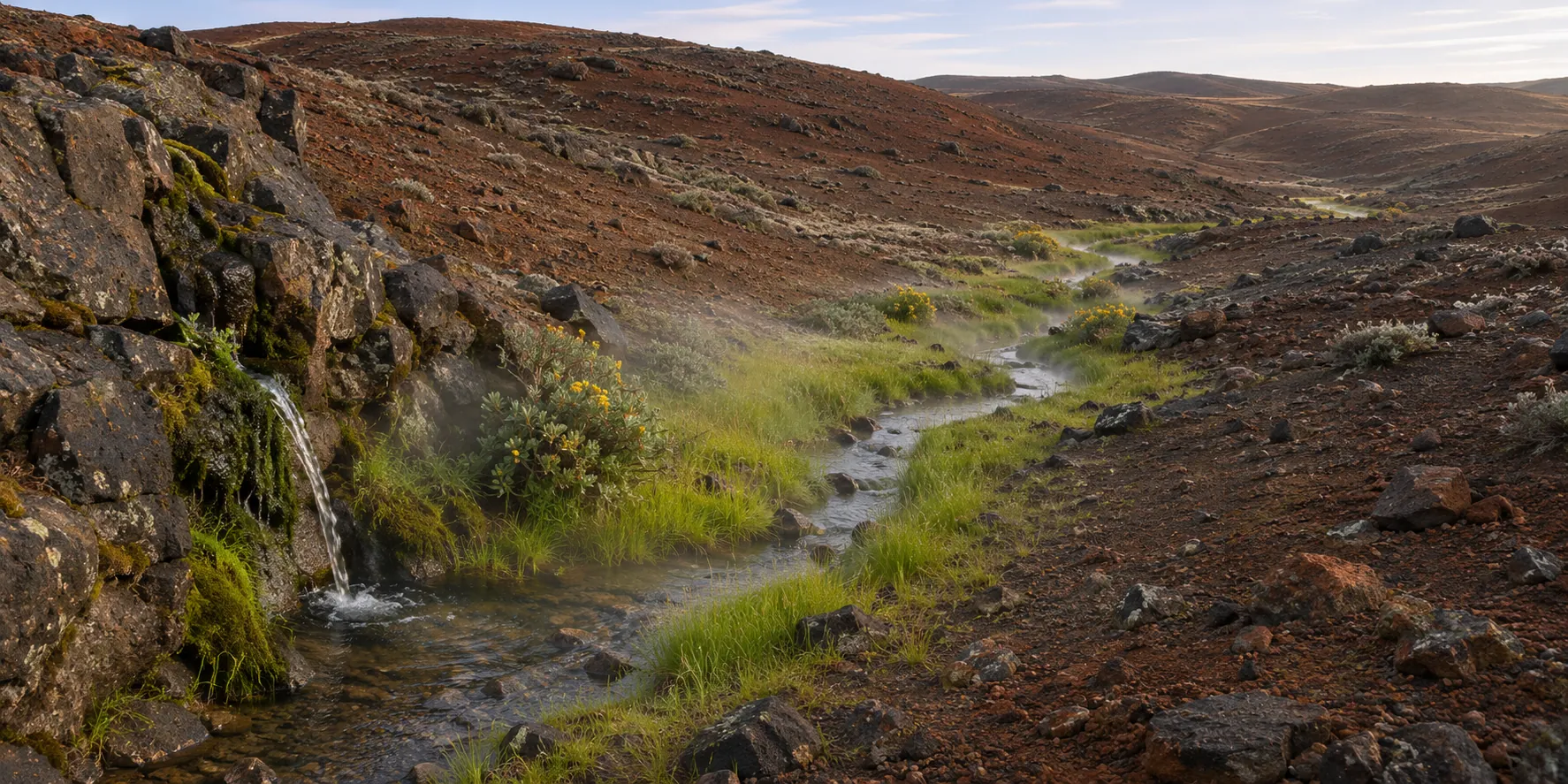
Temperate ravines
More pelage along the back and flanks insulates the body. Flexible scales remain visible across the face, shoulders and forelimbs. Dark bands break up its outline in shaded woodland.
Temperate Rakshur in the atlasTIÅMÅT / NATURAL HISTORY
The oceans held life long before two suns lit the sky. When glaciers retreated and river valleys opened, descendants of those ancient lineages spread, met and diverged again.
In Tiåmåt’s oldest seas, microbes used chemical energy between hot fluids and cold water rich in dissolved compounds. Photosynthesis expanded production in sunlit water. Oxygen accumulated as producers released it and some of the organic carbon they made was buried. Oxygen also reacted with minerals and dissolved compounds, so oxygenated water and sediments developed unevenly.
Productive shallows supported filter feeders, grazers, predators and scavengers. Microbes, moisture-tolerant plants and decomposers extended these food webs to shore. In coastal vertebrates, muscular paired fins took weight in shallow water and an air-breathing organ supplemented the gills. Some descendants could walk onto wet ground, returning to water to breed. Internal fertilization and water-retaining egg membranes later made reproduction possible away from open water.
These forms record steps that happened across different branches. Each preserves a combination of structures that helps explain how later animals moved, fed or reproduced.
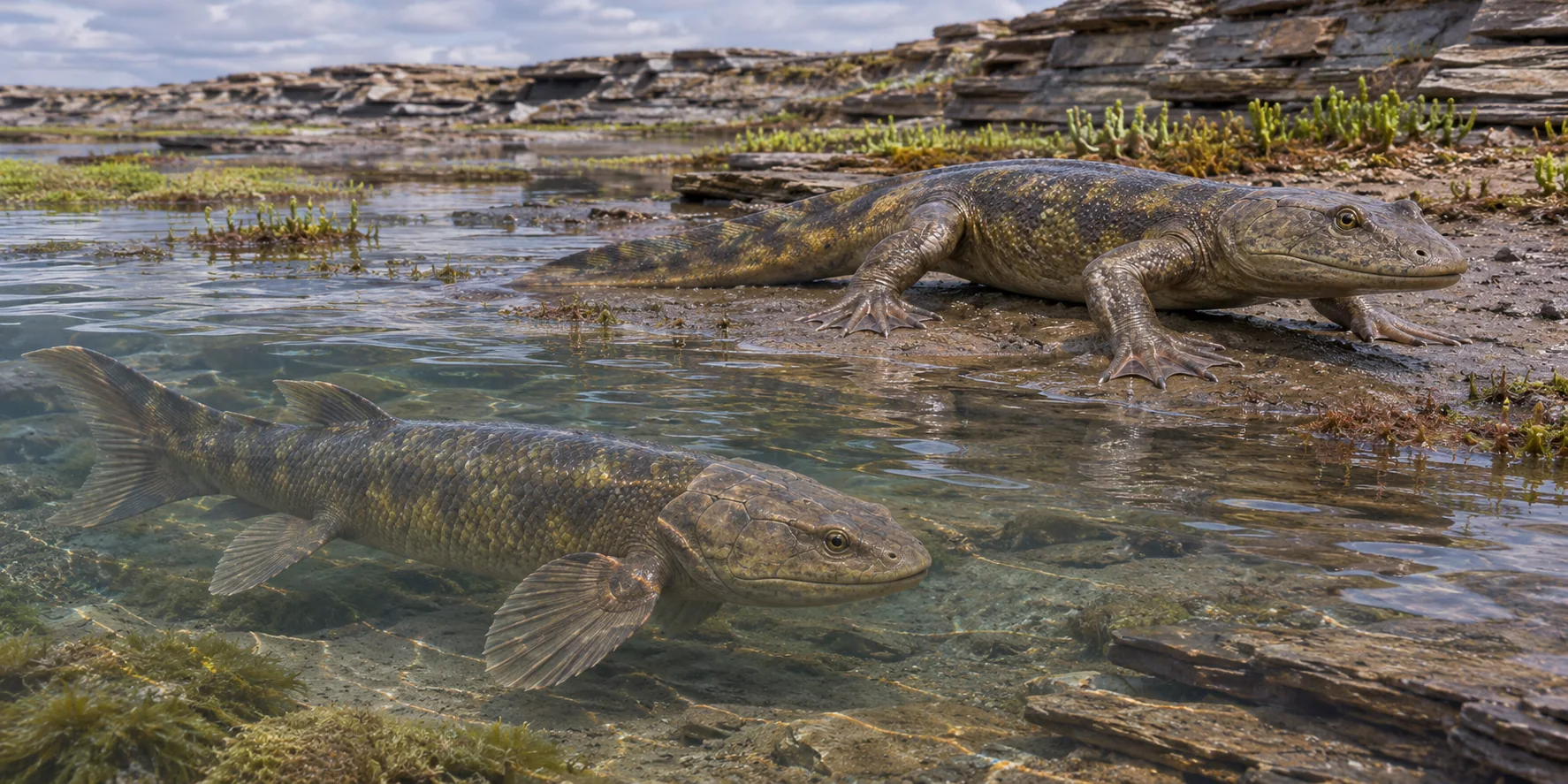
Two pairs of fleshy fins with internal bones braced the animal among roots and riverbed stones. It could supplement its gills by gulping air.
Digits, a mobile neck and lungs let it forage along wet banks. The oldest juveniles occur in deposits formed in connected pools.
Stronger hips and ankles bore the trunk on dry ground. Flexible egg membranes controlled water loss and exchanged gases in sheltered nests.
Insulating fibers covered the body. Egg and juvenile remains found together ground the reconstruction of a nest. Related living forms offer clues to how hatchlings fed on skin secretions.
Elongated feathers, spreadable forelimbs and a long tail gave it control during descents. Powered flight developed later in the native bird lineage.
Grasping hands inherited from climbers accompanied a widening pelvis and feet that supported longer walks across open ground.
The lineages of Tiåmåt predate its passage into the system of Takbiru and Takmat. During the Great Thaw, retreating ice released water into lakes, wetlands and rivers. Where those waters ran between habitable valleys, plants and animals spread. Later retreating waters and shrinking vegetation isolated some populations again.
Refuges formed networks within each continent. They depended on water that stayed usable, enough food for each generation and ways to move when seasons changed. Liquid water under ice could support microbial life where energy and nutrients were available. Larger animals depended on productive habitats and reliable connections to them.
Over many generations the pattern of light, water and temperature favored different inherited traits in different regions. The living forms of the north, the temperate valleys and the volcanic south carry those recent adaptations over a much older anatomy.
Both Rakshur are endotherms. They generate body heat through metabolism, rear a small number of young and nurse them in sheltered dens. Flexible armor leaves the limbs free for short bursts of speed. Dense scutes protect the skin in abrasive ground and limit direct exposure. Shade, water and rest still govern when the animal can hunt.
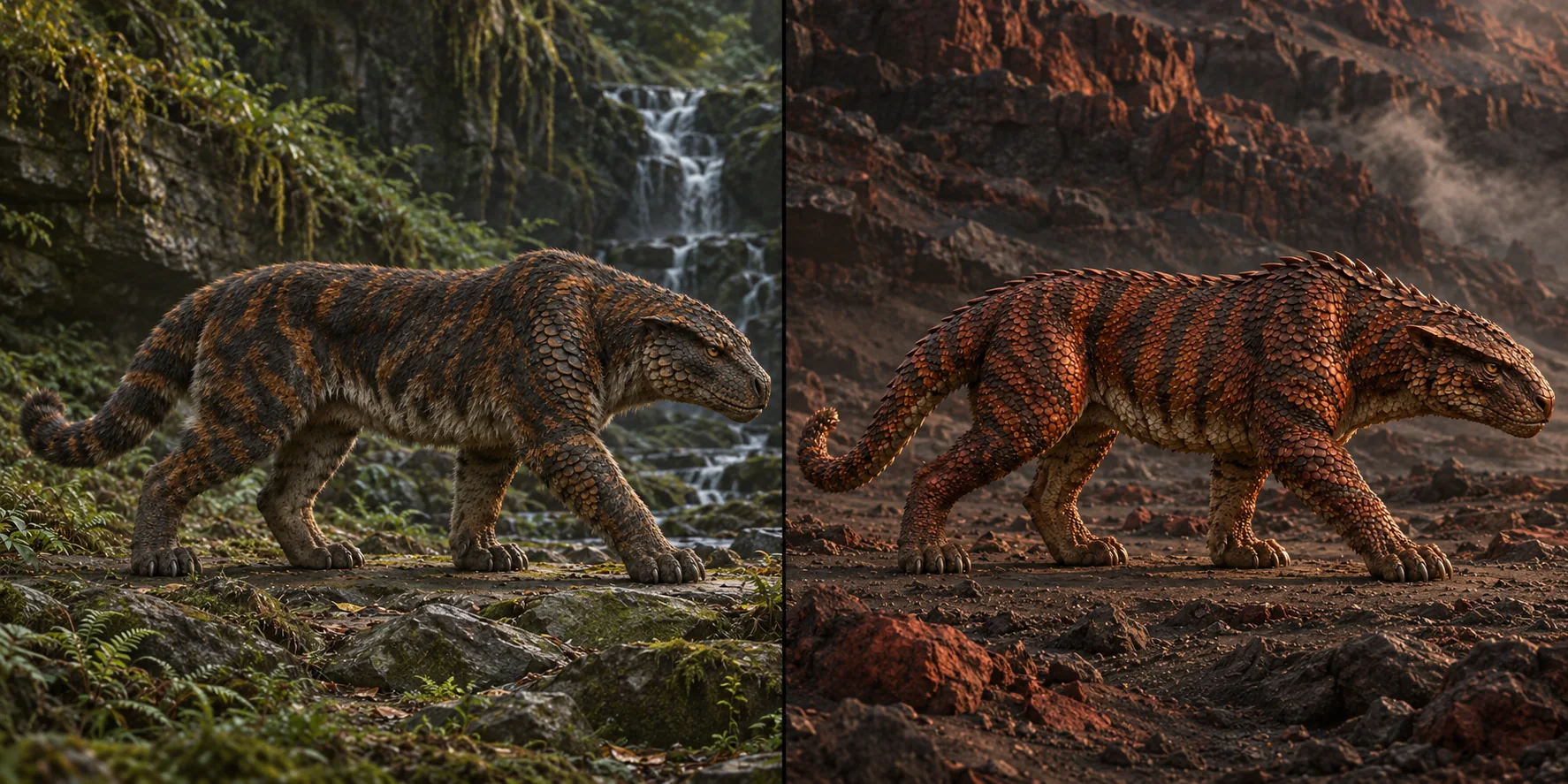
In both forms, hairs grow from follicles in the flexible skin between overlapping keratin scales. A close look at the shoulder shows how differences in hair density and scale coverage change the coat.
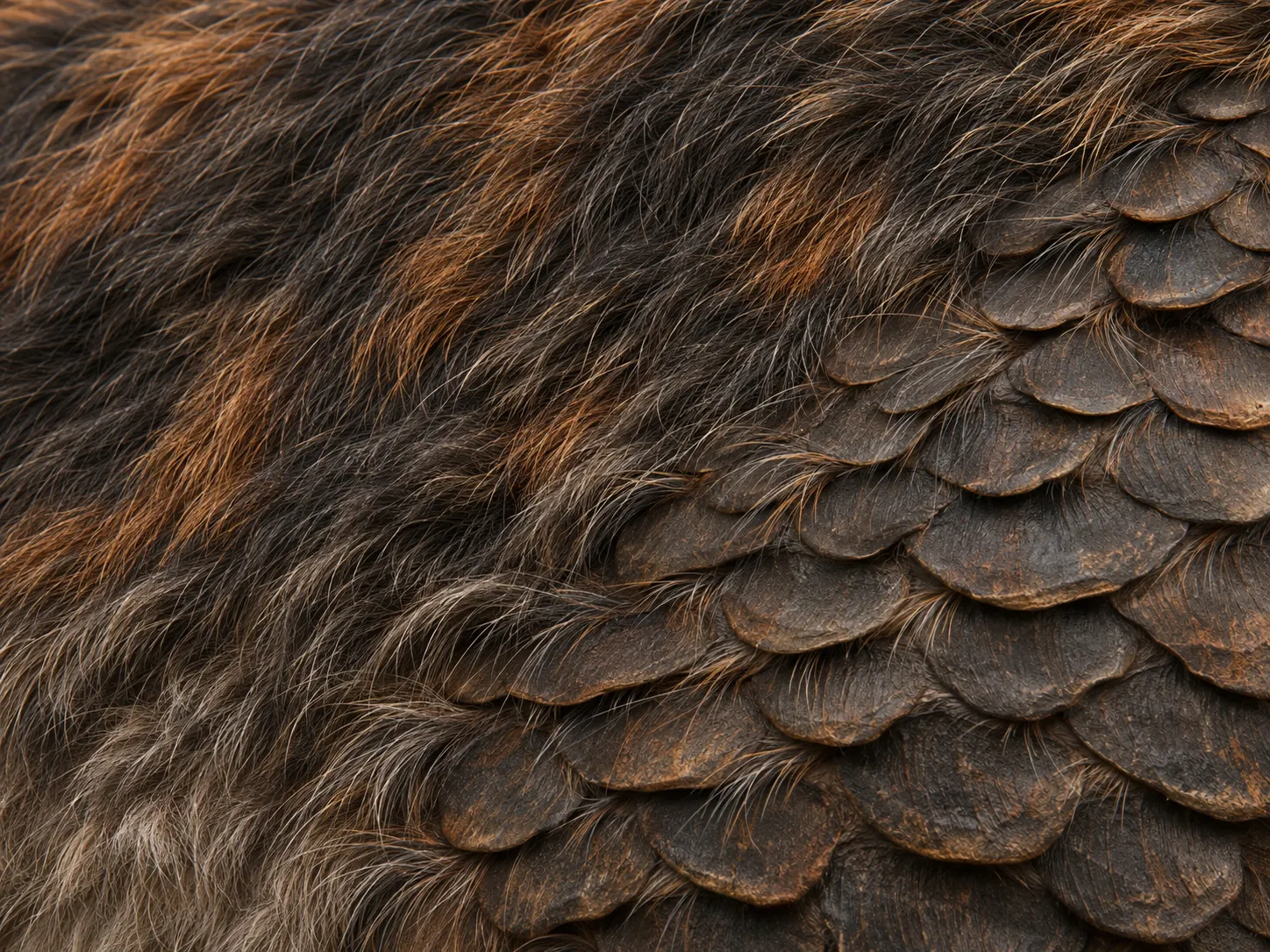
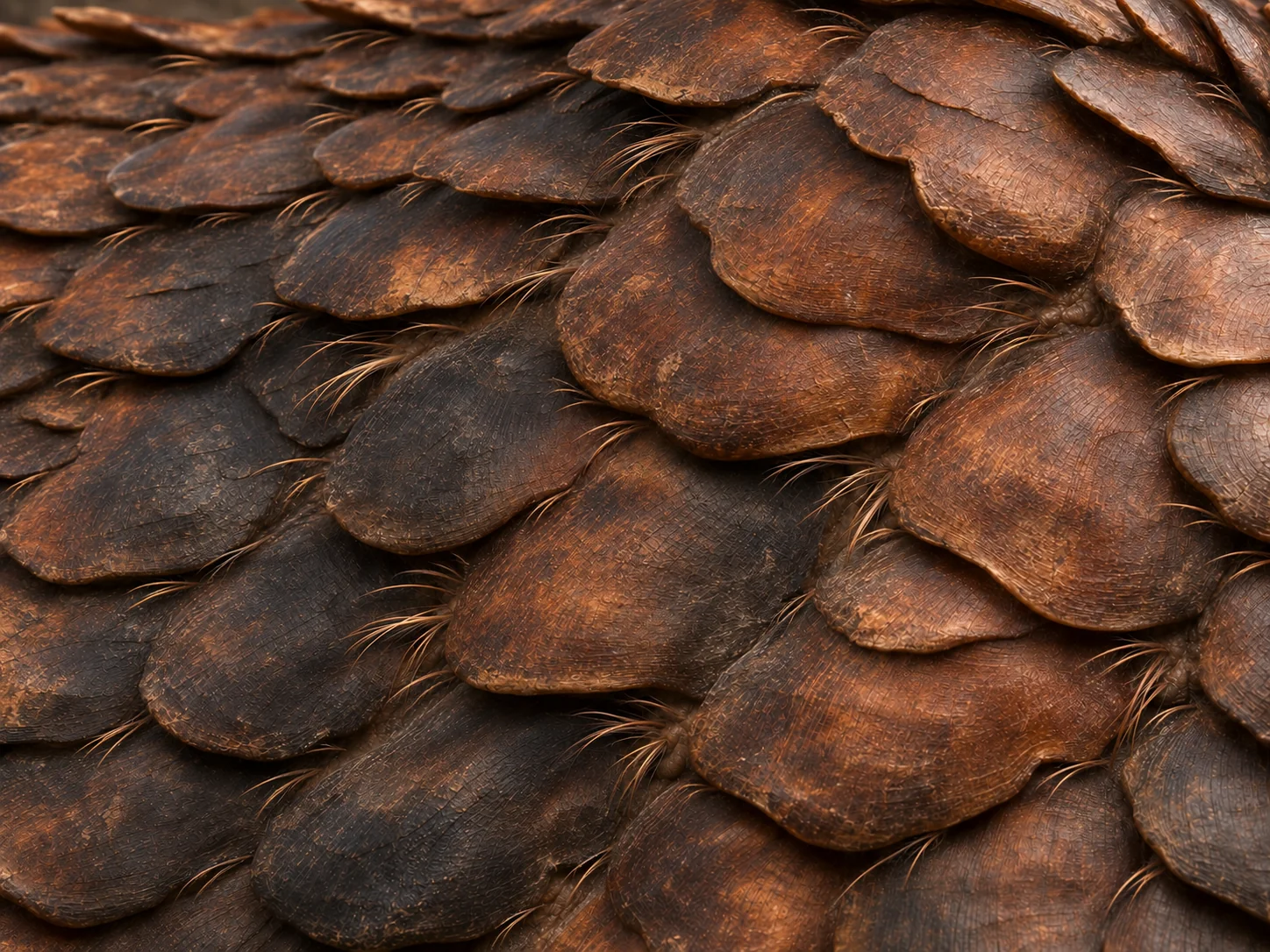
Both forms descend from an endothermic stalker that already had fur and scales before Tiåmåt entered its present binary system about 120,000 Earth years ago. During the Great Thaw, meltwater reopened routes between habitats. As Takbiru continued to expand and waters later retreated, some populations became isolated again. Over generations, denser fur helped retain heat in cool ravines, while greater scale coverage protected the skin from abrasion in the rocky south. Shade and hunting after dusk still help the meridional Rakshur manage heat.
More pelage along the back and flanks insulates the body. Flexible scales remain visible across the face, shoulders and forelimbs. Dark bands break up its outline in shaded woodland.
Temperate Rakshur in the atlasOverlapping copper and bronze scales cover much of the trunk and back. A ridge of raised scutes follows the spine. Rakshur often hunt after dusk, following prey between shelter and water. Some individuals learn to hunt and attack alongside an Aqmorita handler.
Meridional Rakshur in the atlas