Akkad, Hakbiru and Aqmorita share a deep ancestry. Their bodies carry adaptations to warm basins, the glacial north and the volcanic south, alongside traits that vary within every family.
One ancestry, three peoples
Akkad, Hakbiru and Aqmorita descend from Homo tiamatus, a native bipedal lineage. They share prehensile hands, lungs and a closed circulation, and generate body heat through metabolism. Their ancestors belong to an egg-laying branch that evolved nursing. The lineage later developed internal gestation and live birth.
Before the two suns
Complex life and the ancestors of Tiåmåt’s peoples already existed in its natal system. Inherited variations and some regional divergence predate the capture, about 120,000 Earth years ago.
The Great Thaw
Entering a binary system changed heat and light at the surface. As Takbiru evolved toward a red giant, retreating ice fed rivers and wetlands. Some corridors reconnected populations while others left them in separate refuges.
After the thaw
Local heat, radiation and access to fresh water changed survival and reproduction over generations. Selection shifted the frequency of inherited traits. Individuals can also acclimatize during their own lifetimes.
Earth research. Egg-laying mammals and placental mammals illustrate separate stages in the evolution of nourishment before and after birth. Brawand et al. (2008). Models of evolving stars track changes in luminosity and effective temperature over time. Choi et al. (2016). Climate models estimate how the habitable zone moves as stars evolve beyond the main sequence. Ramirez and Kaltenegger (2016).
Life in three regions
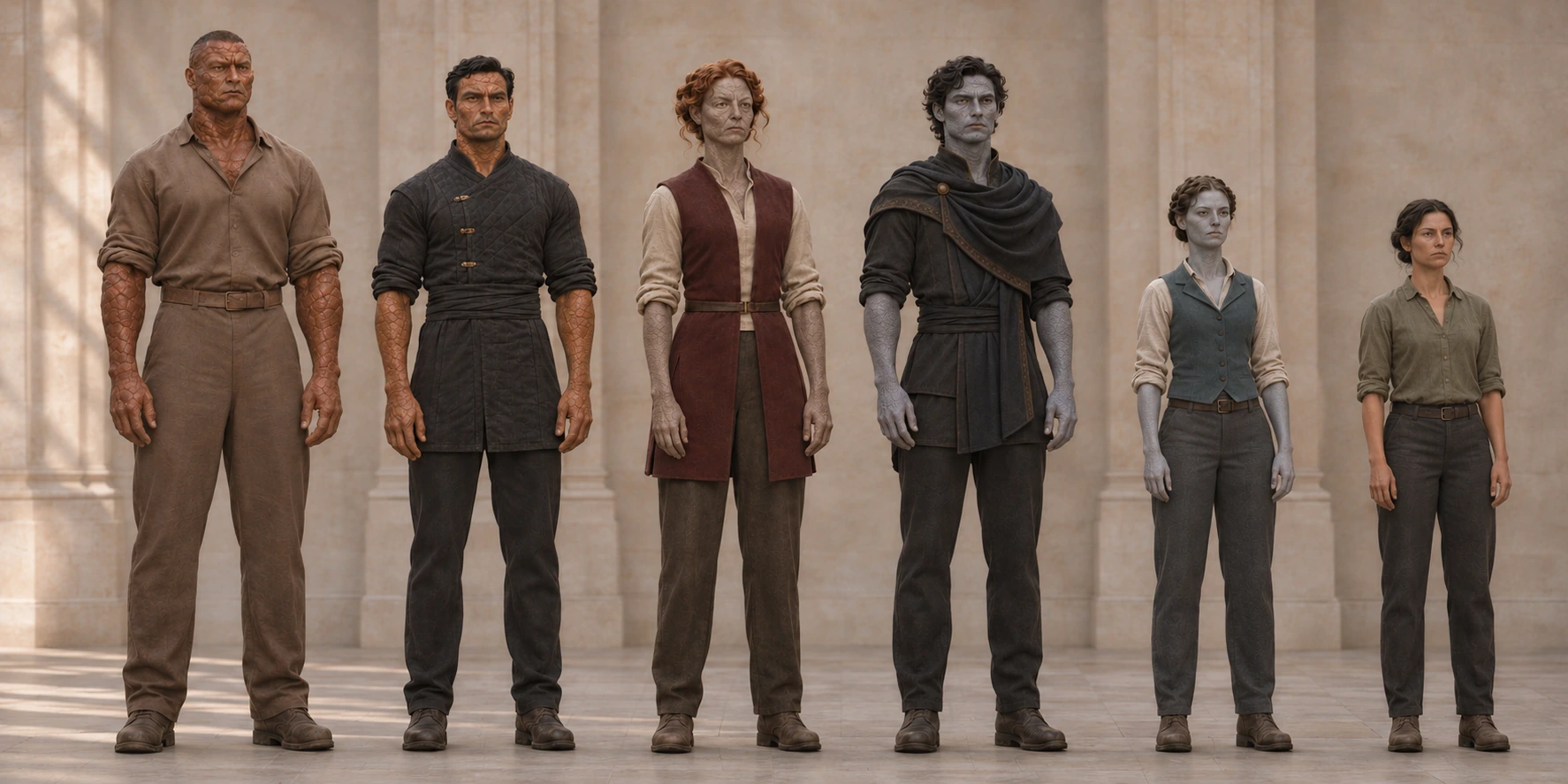
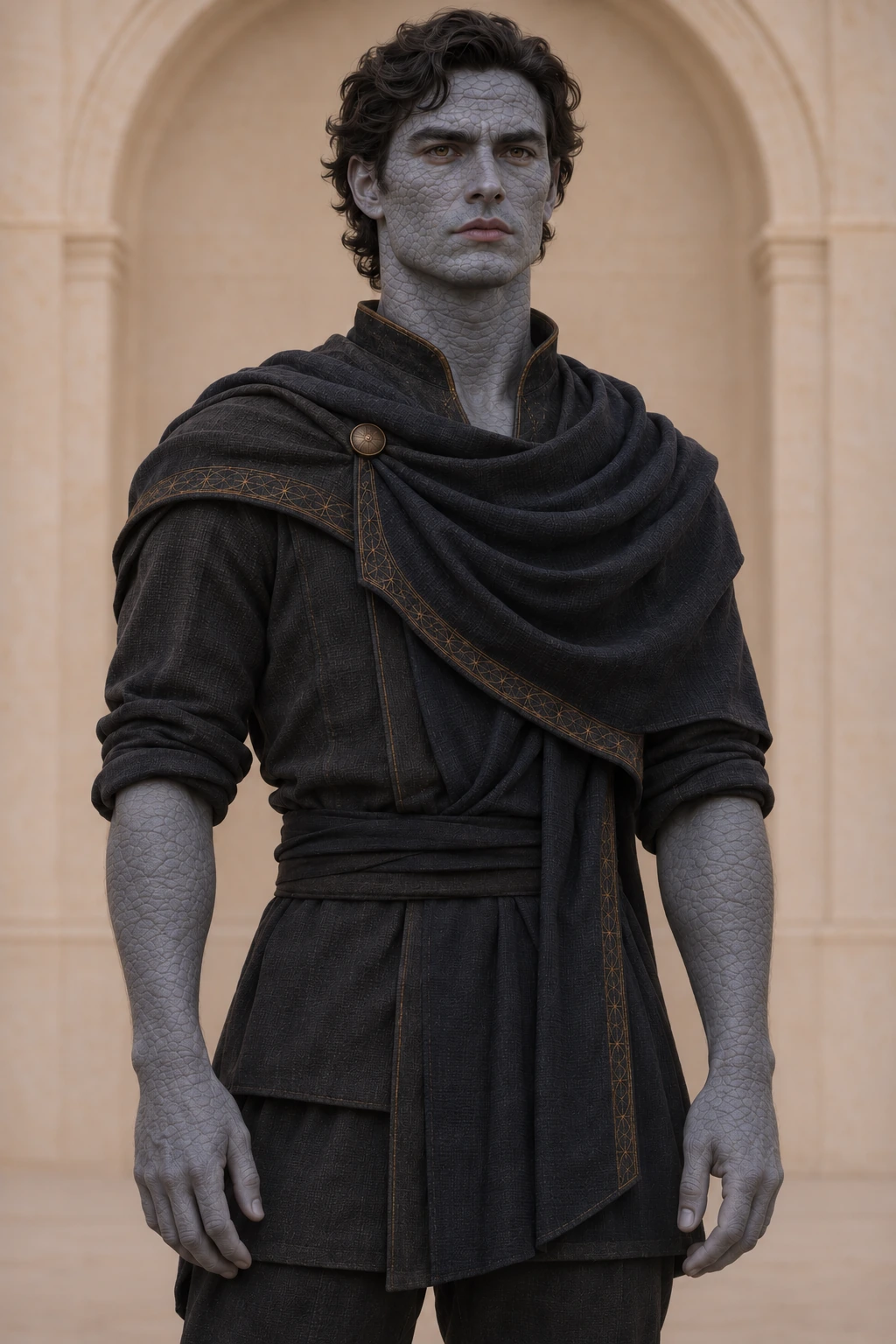
From left to right stand an Aqmorita, an Akkad, a Heksaruk, a Hakbiru, a Hektrew and an Earth human. The illustration shows the relative stature of the six figures. The adult stature chart gives the reference measurements, including 1.78 m for the Hektrew and 1.70 m for the Earth human.
Akkad
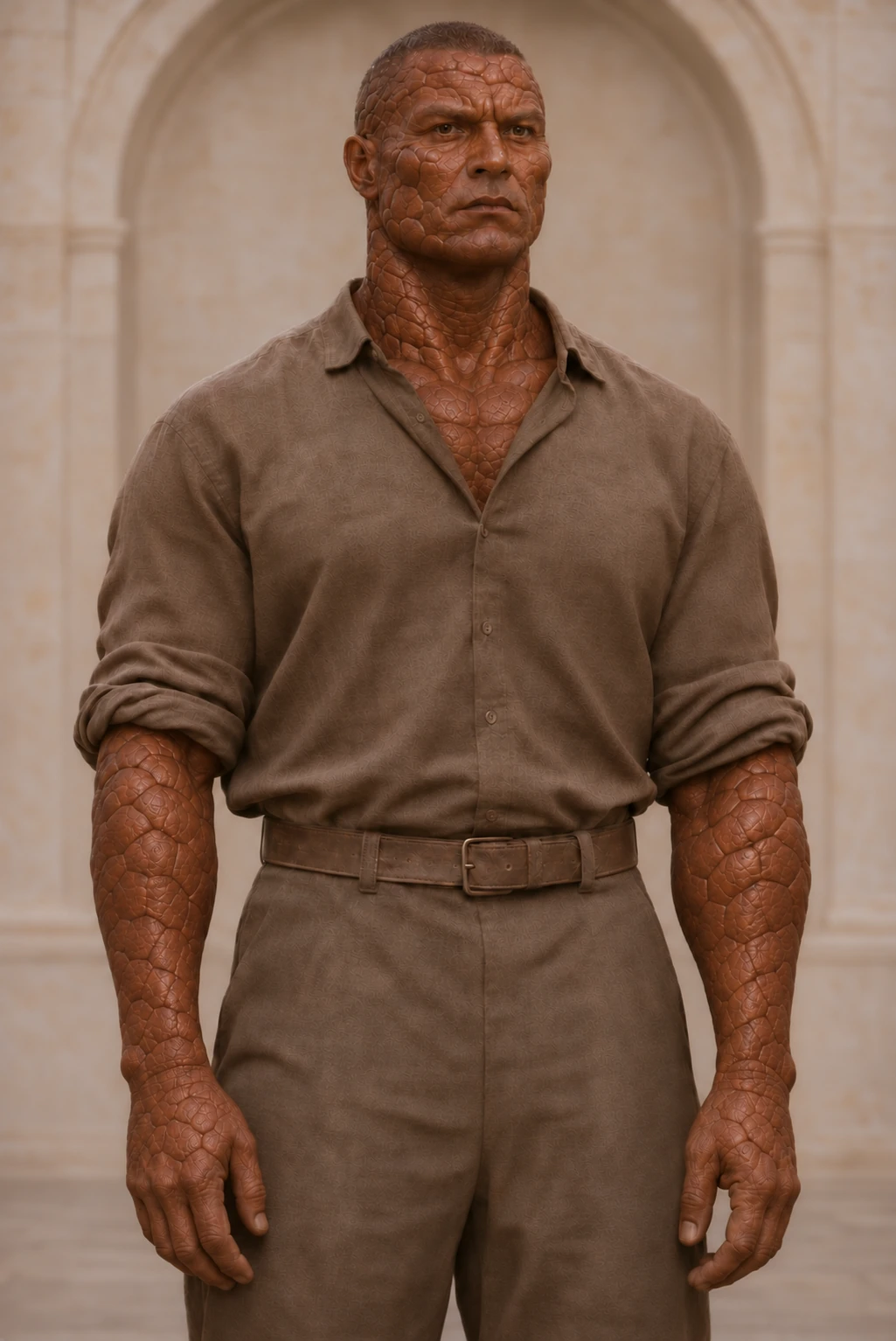
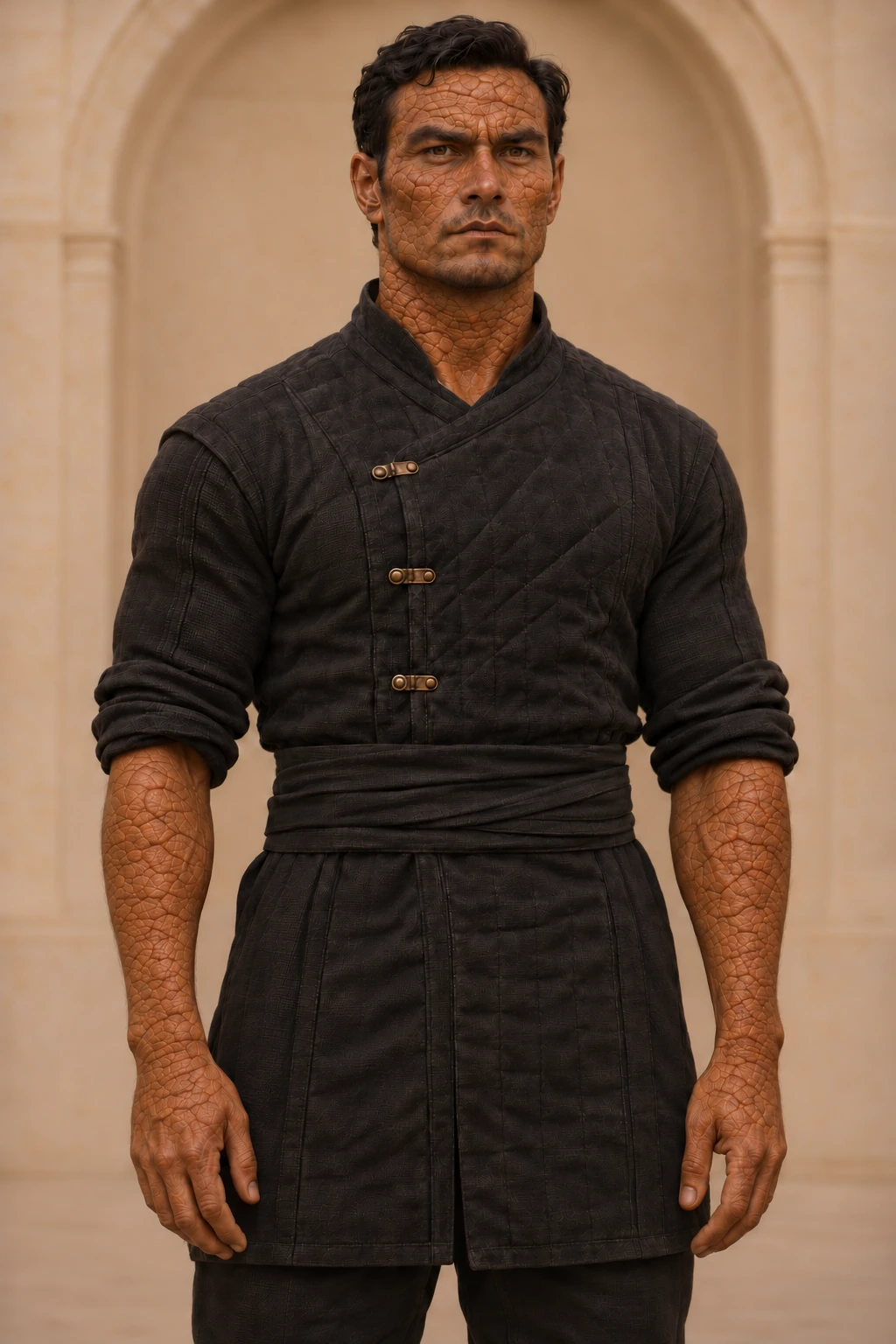
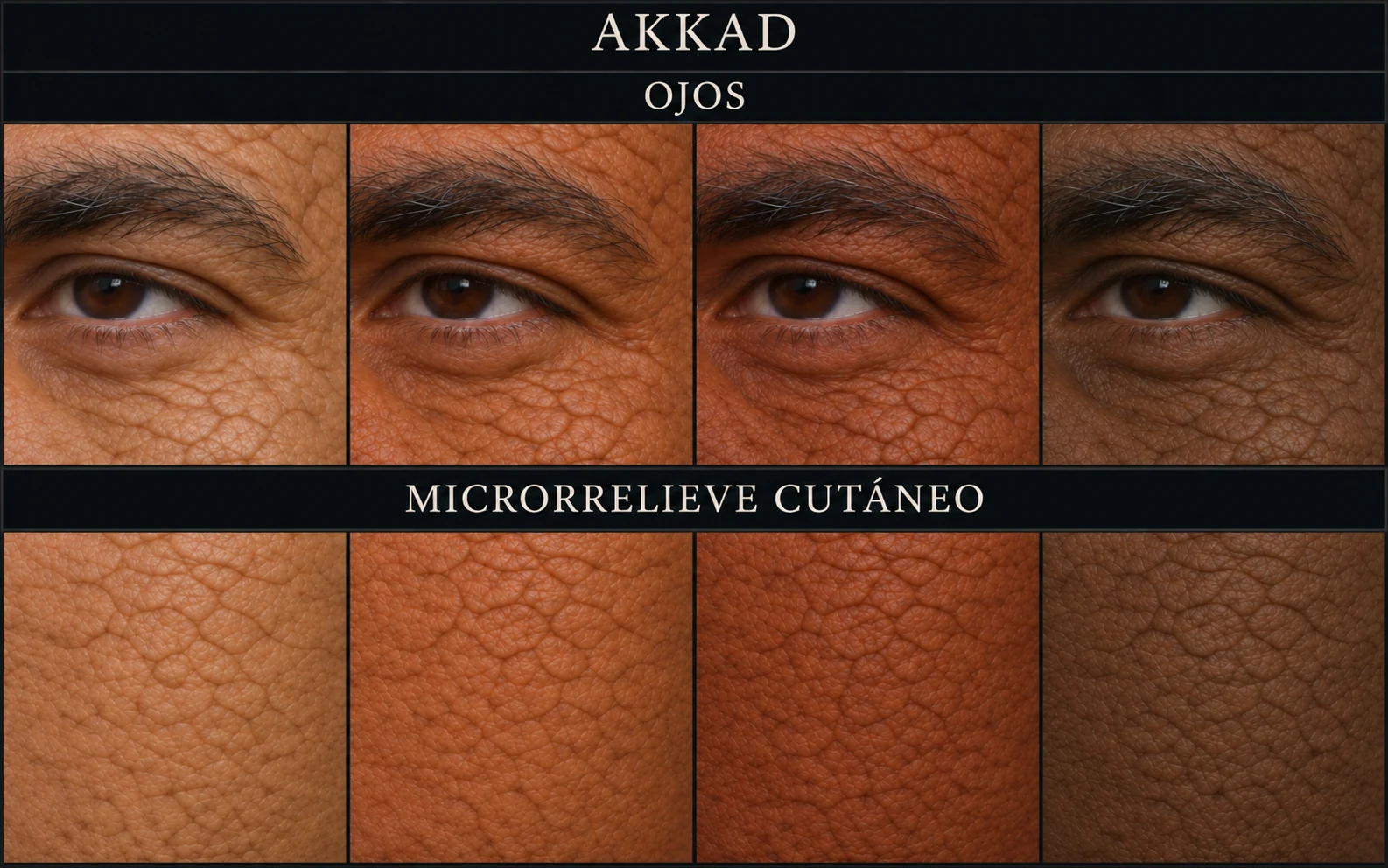
In warm, often dry basins, Akkad generally tolerate sustained warmth and surface exposure better than people accustomed to the glacial north. Hydration and shade remain essential. Fine grooves follow the contours of the skin. Their relief is more pronounced than in the Hakbiru example and shallower than in the Aqmorita example. Tones range from muted red-brown to warm copper.
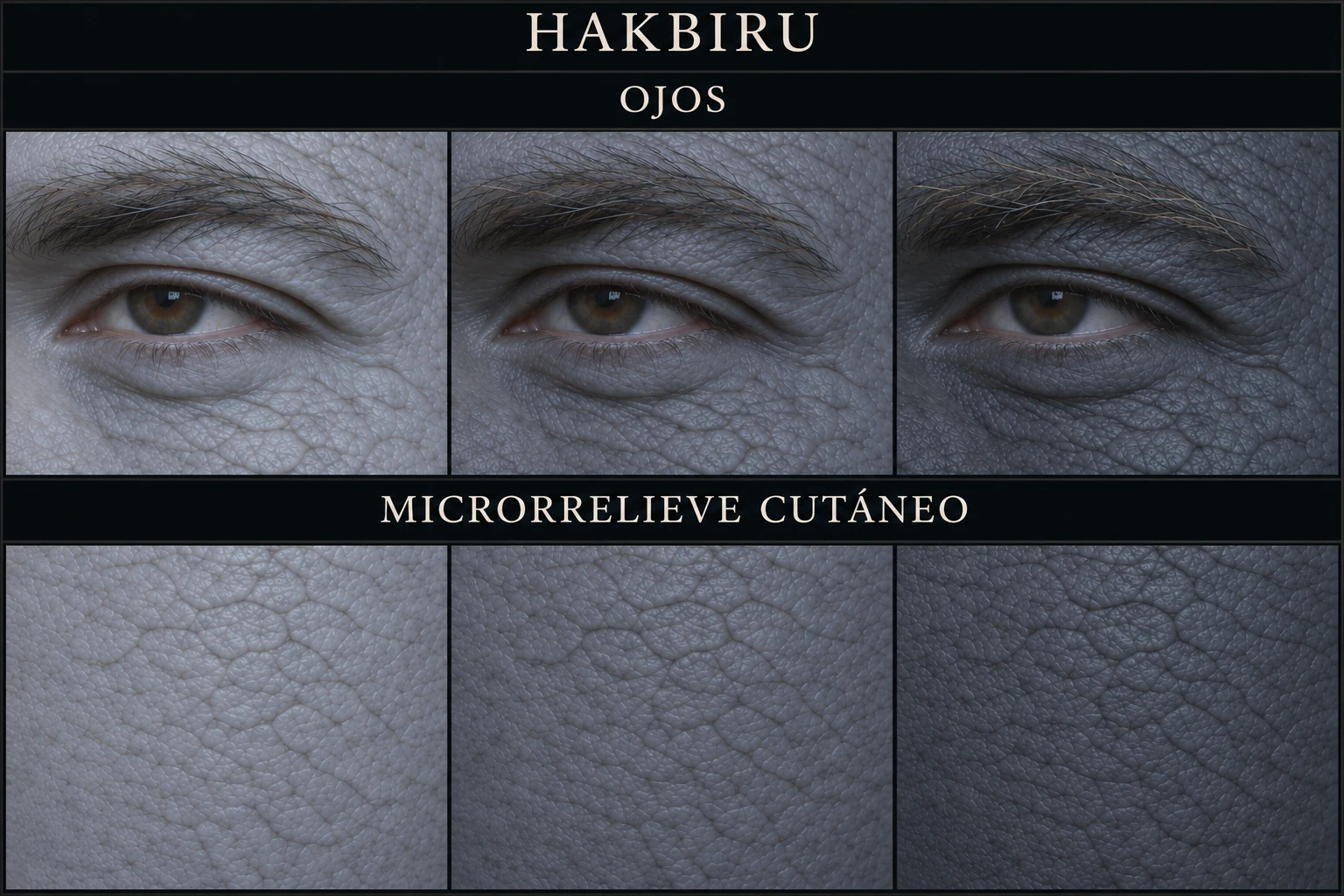
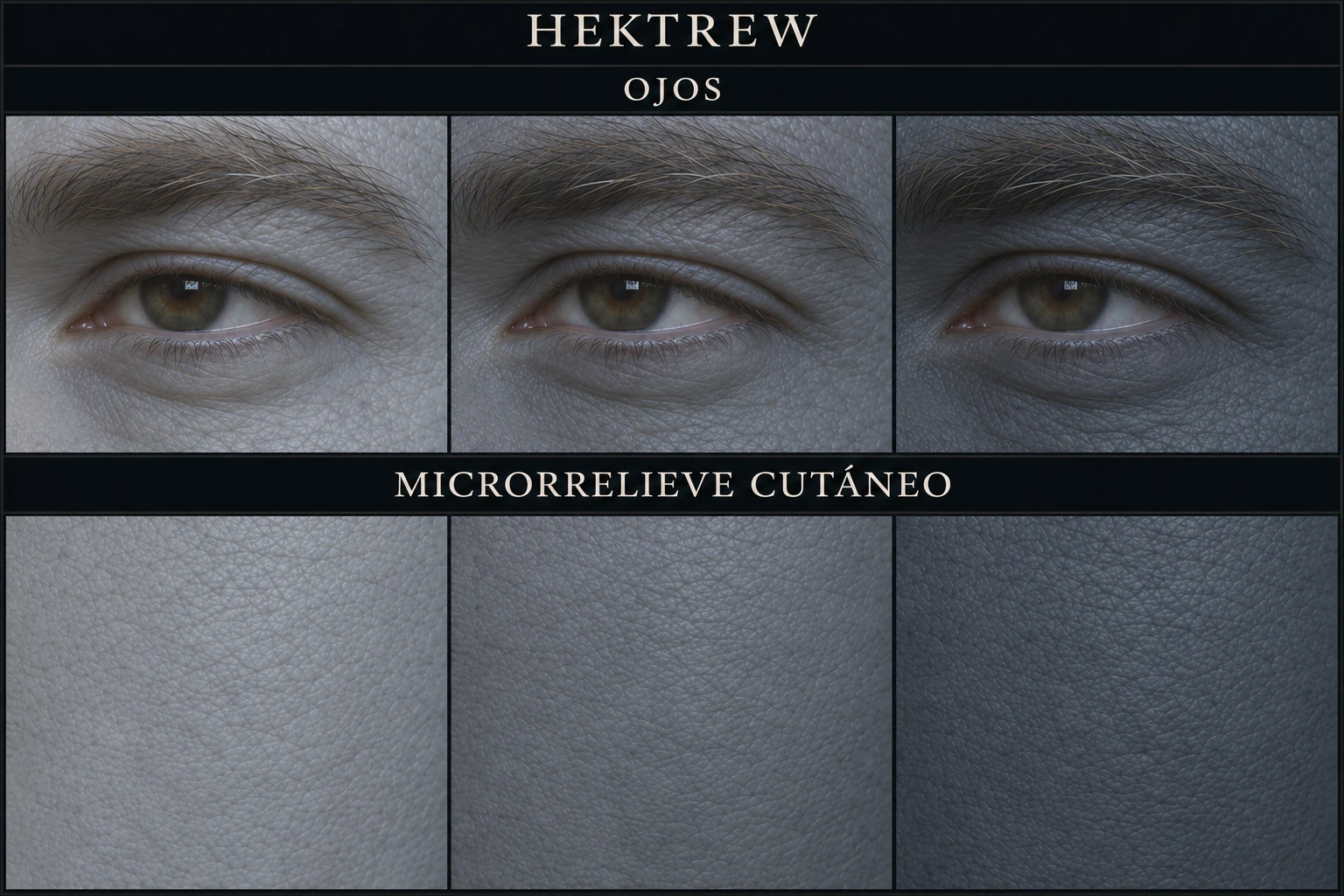
Heat conservation supports life in the glacial north. Insulation and control of blood flow near the surface help in cold air and wind. Warm conditions and intense exposure away from the north strain the skin and heat regulation. Cool gray tones and fine skin microrelief are common. The pattern has a lower profile than in the Akkad comparison and more relief than in the Hektrew example.
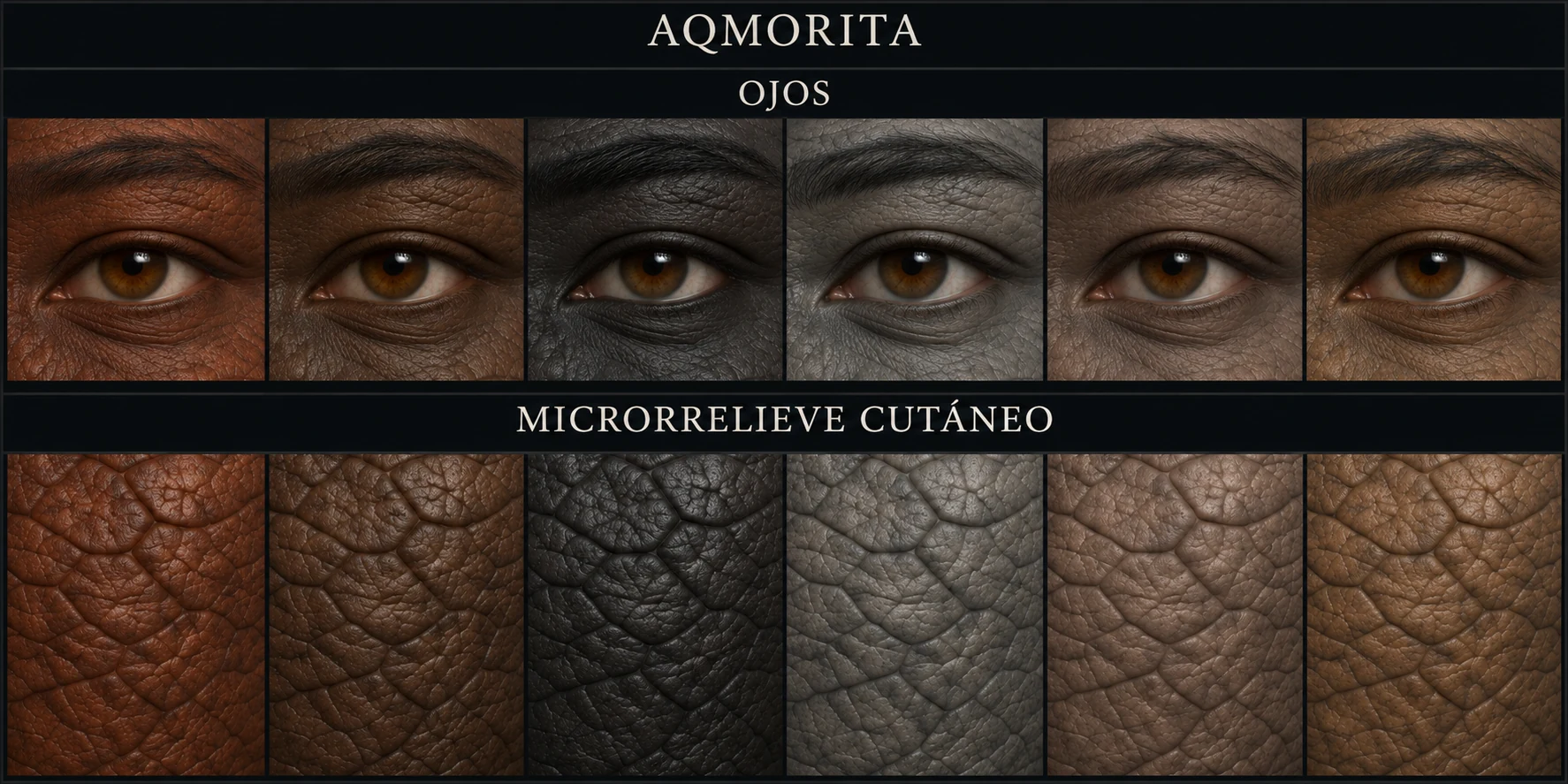
Daily life in the volcanic south favors a protective skin surface and use of shade and shelter. Skin tones include reddish copper, brown, charcoal and ash gray. The Aqmorita in this comparison has the broadest and most pronounced skin grooves. Ash and rough rock still injure exposed tissue, and concentrated gases remain dangerous.
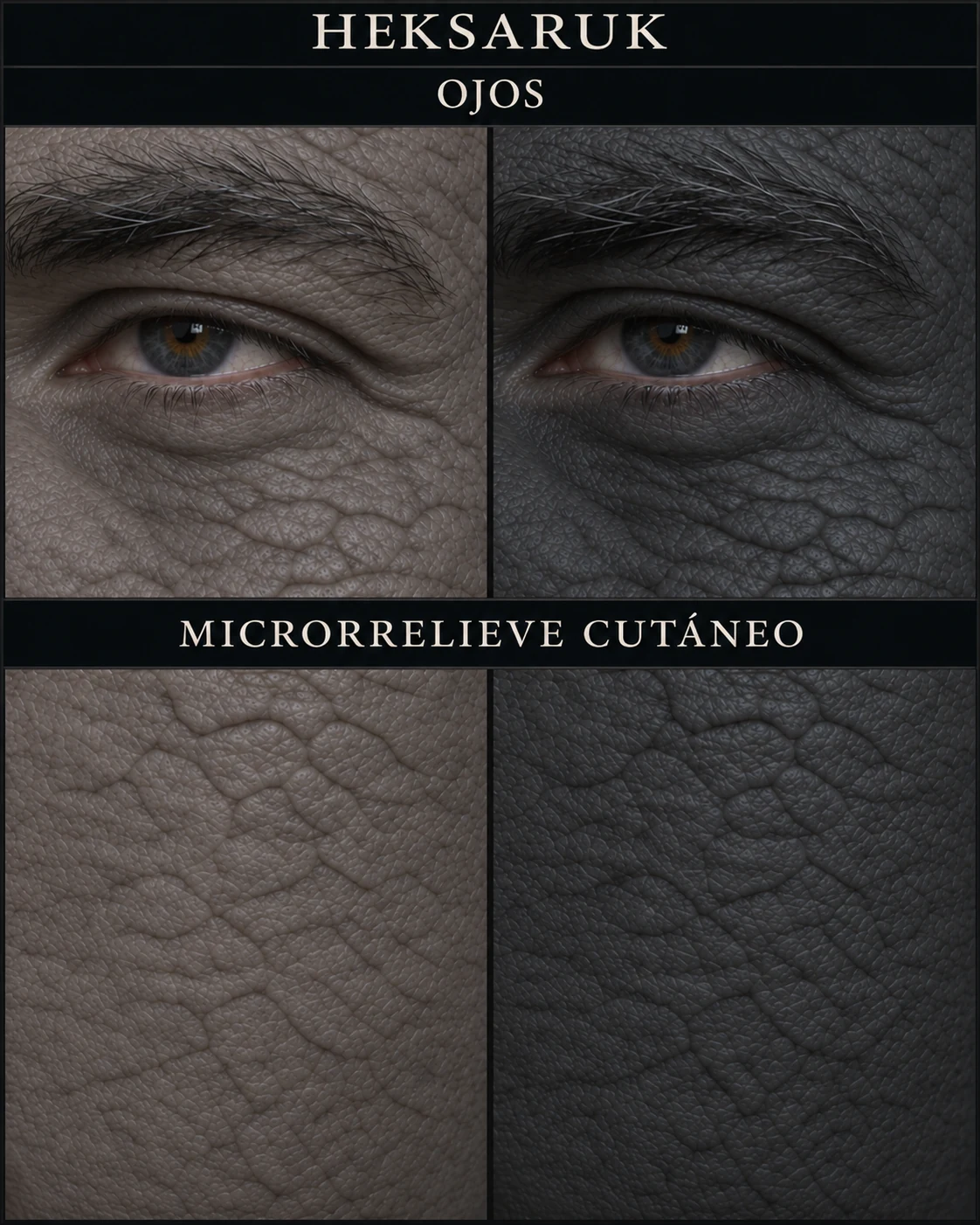
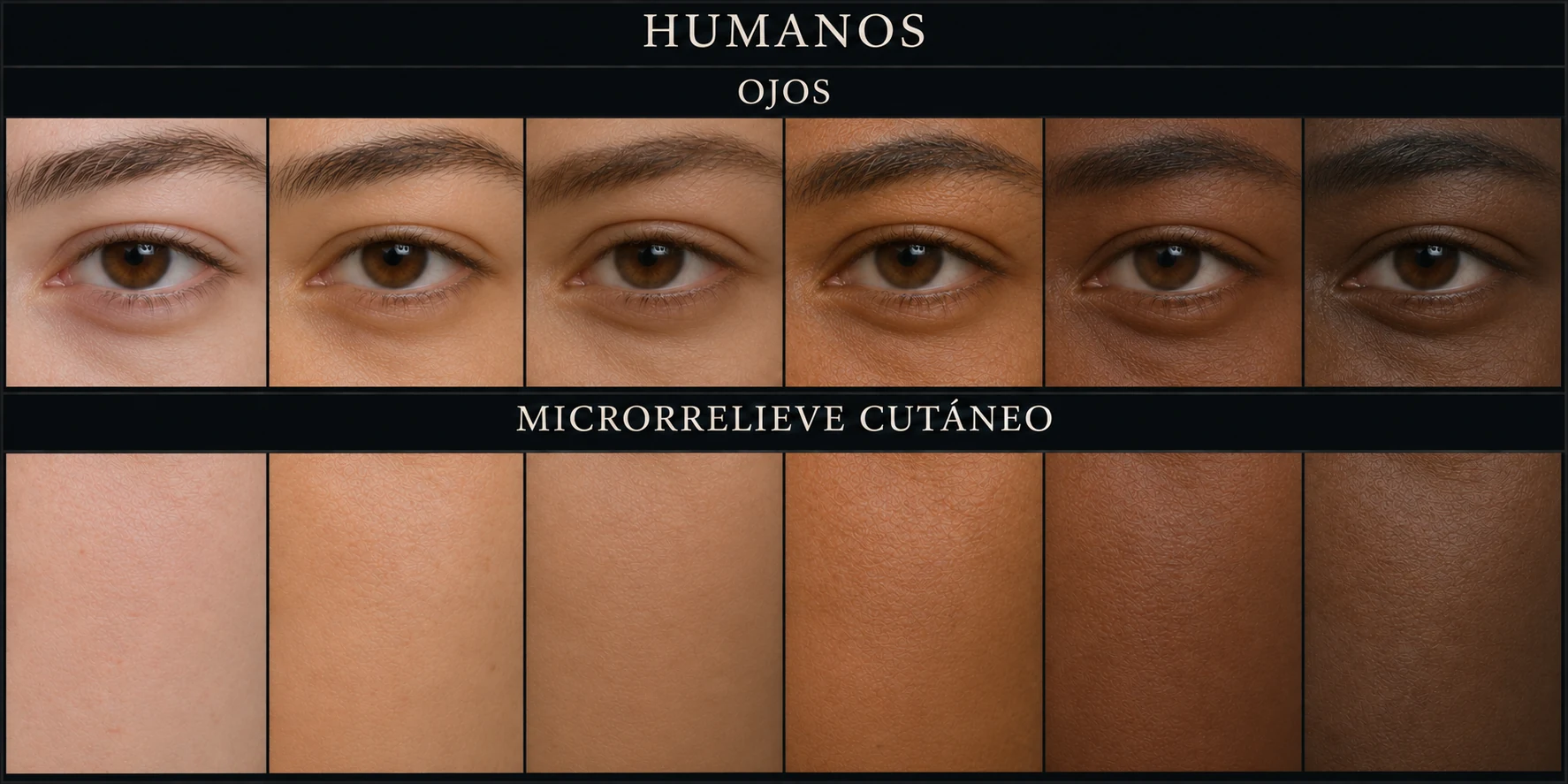
Skin microrelief is the pattern of fine furrows, ridges and pores on a continuous skin surface. The plates align each eye with a separate sample of its cheek skin. The headings read Ojos (eyes) and Microrrelieve cutáneo (skin microrelief).
Pigmentation, the skin barrier and visible grooves are separate traits. Cells and lipids in the outer barrier help control water loss and contact with irritants. Deeper tissue support and repair affect fragility. Pigment and cellular repair influence ultraviolet damage. Clothing, shade, cloud and reflection change the dose the skin receives.
AqmoritaOjosMicrorrelieve cutáneoAqmorita. Six variants from copper-brown to charcoal and ash gray. The broadest grooves in the comparison are visible in the cheek samples.
AkkadOjosMicrorrelieve cutáneoAkkad. Four golden-brown, copper and deep brown examples. The cutaneous furrows remain distinct, with shallower relief than in the Aqmorita examples.
HakbiruOjosMicrorrelieve cutáneoHakbiru. Three cool gray to blue-gray examples with softer relief than Akkad or Heksaruk and clearer grooves than Hektrew.
HektrewOjosMicrorrelieve cutáneoHektrew. Three blue-gray examples with a fine, shallow network of lines. Tissue fragility depends on the integrity and repair of the skin and underlying tissue.
Earth humanOjosMicrorrelieve cutáneoEarth human. Six examples of human skin pigmentation with fine microrelief. All six irises in this plate happen to be brown.
Hue, iris color and the depth of the furrows vary among individuals and across the body. Some eyes sit deeper in the face, which offers partial shelter from wind, dust and glare. The appearance of an iris gives little information about the wavelengths its owner can see. Blood color depends on the circulating pigments and their oxygenation. The skin has its own pigments and tissue structure.
Earth research. Microscopic cheek imaging measures furrow width, pores and the areas they bound. Wu and Tanaka (2021). Human skin experiments measured differences in DNA damage after UV exposure with differing pigmentation. Tadokoro et al. (2003). Measurements on human skin link the lipid structure of the outer barrier to water permeability. Nakazawa et al. (2019).
Standing under stronger gravity
Surface gravity is about 13.6 m/s² (1.39 times Earth’s). At the same mass, weight is about 39 percent higher than at Earth’s surface. Pelvic support, stable joints and limb alignment help manage the load. A taller body also has a greater vertical distance between the heart and head, so arteries must maintain head-level pressure and the veins must return blood from the legs.
Greater muscle cross-section can produce more absolute force. Lifting, carrying and endurance also depend on leverage, joint design, oxygen delivery, temperature and the task. The tall peoples’ stature alone gives no reliable strength multiplier against a human.
Approximate adult stature
Aqmorita, Akkad, Heksaruk and Hakbiru2.44–2.74 m (8–9 ft)
Hektrew1.68–1.83 m (5 ft 6 in–6 ft)
Earth human in the illustration1.70 m (about 5 ft 7 in)
01 m2 m3 m
The lighter segments mark each native adult range. The comparison uses 1.78 m (5 ft 10 in) for the Hektrew and 1.70 m (5 ft 7 in) for the Earth human. A human of that stature is 8 cm shorter than the Hektrew example and falls within the Hektrew reference range. Adult stature varies within and across populations. The bars give the numerical comparison and the portrait illustrates it.
Earth research. Mammalian limb posture and leverage change with body size. Biewener (1989). Measurements in giraffes show physiological regulation in a tall animal under a substantial hydrostatic gradient. Hargens et al. (1987).
How blood carries oxygen
Tiamoglobin is the name of a shared system with two distinct oxygen carriers. A globin with iron in its heme group binds oxygen inside blood cells. A second protein uses copper and circulates in the plasma. Both pathways are ancestral. The cellular iron carrier predominates during prenatal development.
Aqmorita and Akkad. The iron-heme pathway predominates. The resulting blood is red, with deep copper-red and red-brown appearances among the examples. Vanadium occurs in trace amounts. Older Aqmorita references to phosphates describe cellular regulation. Iron in heme binds the oxygen.
Hakbiru. The copper-bearing fraction is especially abundant in adults. Its oxygenated form gives the blood a blue to dark blue-violet cast. The iron pathway also supplies oxygen, including during exertion.
Heksaruk and Hektrew. Contributions from each pathway can vary independently of pigmentation or visible skin relief. Hybrid ancestry can yield different balances of the same two carriers.
Successful delivery requires the carrier to load oxygen in the lungs and release it in the tissues. Temperature, acidity, carrier concentration and blood flow matter together. The reference atmosphere is 1.42 bar with an oxygen partial pressure of 0.28 bar. Ventilation, blood buffers and the kidneys help manage carbon dioxide and acidity. Elevation, exertion and poor ventilation can change the burden locally.
Earth research. Structural work identifies the iron-heme oxygen site in human oxyhemoglobin. Shaanan (1982). Researchers found traces of an incomplete ancestral copper protein in a snail whose main oxygen carrier is hemoglobin. Lieb et al. (2006). Antarctic octopod experiments show how a copper carrier’s oxygen uptake and release vary with pH and temperature. Oellermann et al. (2015).
Heksaruk and Hektrew
Akkad and Hakbiru can have viable children. Heksaruk and Hektrew are two natural patterns of development among people with that shared ancestry. Heksaruk usually retain the tall stature and general physiological stability of their parent lineages. Their skin often has an Akkad-like relief and can carry traits from either lineage, while features of their blood can follow a different balance.
Hektrew typically reach a smaller adult stature. Their tissues are more fragile and they have narrower tolerance for heat and radiation. Among hundreds of recorded Hektrew lives, the observed mean was about 60 Earth years. Access to care, shelter and nutrition shapes individual outcomes. Exceptional cognitive ability is a well-documented Hektrew trait. Hektrew have distinguished themselves in mathematics, astronomy, philosophy and other disciplines.
Long lives are possible among Akkad, Aqmorita and Hakbiru. An Akkad can still be active at around 170 Earth years. Realized longevity depends on exposure, work, nutrition, water and care. For example, the health of Aqmorita forced to work in mines reflects the effects of deprivation and injury as well as individual physiology.
Children develop within maternal membranes and nurse after birth. The Hakbiru membranes sometimes called capsules remain within the mother during gestation. Maternal and fetal circulations stay separate during the exchange of gases and nutrients. The Aqmorita branch diverged earlier. Differences in gamete recognition or early development are possible explanations for its reproductive separation. There are no documented viable descendants from an Aqmorita cross with either lineage.
Earth research. Measurements in sheep tracked oxygen and glucose exchange between maternal and fetal circulations. Sparks et al. (1983). Work on deer mice documented placental abnormalities after fertilization between diverged lineages. Vrana et al. (2000).
In parts of Enkora, survival under Tiåmåt’s conditions became a measure of divine favor. Some conservative Houses and religious authorities called a Hektrew birth a punishment from the gods. They treated a small body and vulnerable tissues as signs of impurity. Within communities that enforced the doctrine, many Hektrew newborns were condemned and sacrificed at birth. Other families hid their children, entrusted them to others or risked their own standing to protect them.
Hakbiru communities in the glacial north developed places of refuge. At Vel-Thuri, children receive shelter, care and an education. Its teachers and scholars study mathematics, astronomy, philosophy and ancient texts. The north’s colder conditions can ease some forms of exposure. Reliable care and protection remain essential.